
Full Service Wine Room Design and Construction for Luxury Homes
Wine Cellar Design That Begins With Intention
Wine cellar design is the foundation of every successful wine room. At Coastal Custom Wine Rooms, design is never treated as decoration layered onto a finished space. It is the framework that guides how the room functions, how it feels, and how it performs over time.
Every wine cellar we design is shaped by three core considerations: the architecture of the home, the nature of the wine collection, and the lifestyle of the client. A well designed cellar should feel purposeful, balanced, and intuitive to use. It should enhance the surrounding spaces while standing confidently as a destination of its own.
From dramatic glass enclosed wine rooms to quiet traditional cellars, our design process focuses on clarity, proportion, and long term relevance rather than trends.
Serving luxury homes from Naples to Sarasota
Coastal Custom Wine Rooms provides wine cellar design services throughout Florida’s west coast, including Naples, Bonita Springs, Estero, Fort Myers, Cape Coral, Punta Gorda, Port Charlotte, Englewood, Venice, and Sarasota.
Our Design Center is located at 6260 Shirley Street, Suite 605, Naples, Florida 34109. Business hours are Monday through Friday, 8:00 AM to 4:00 PM.
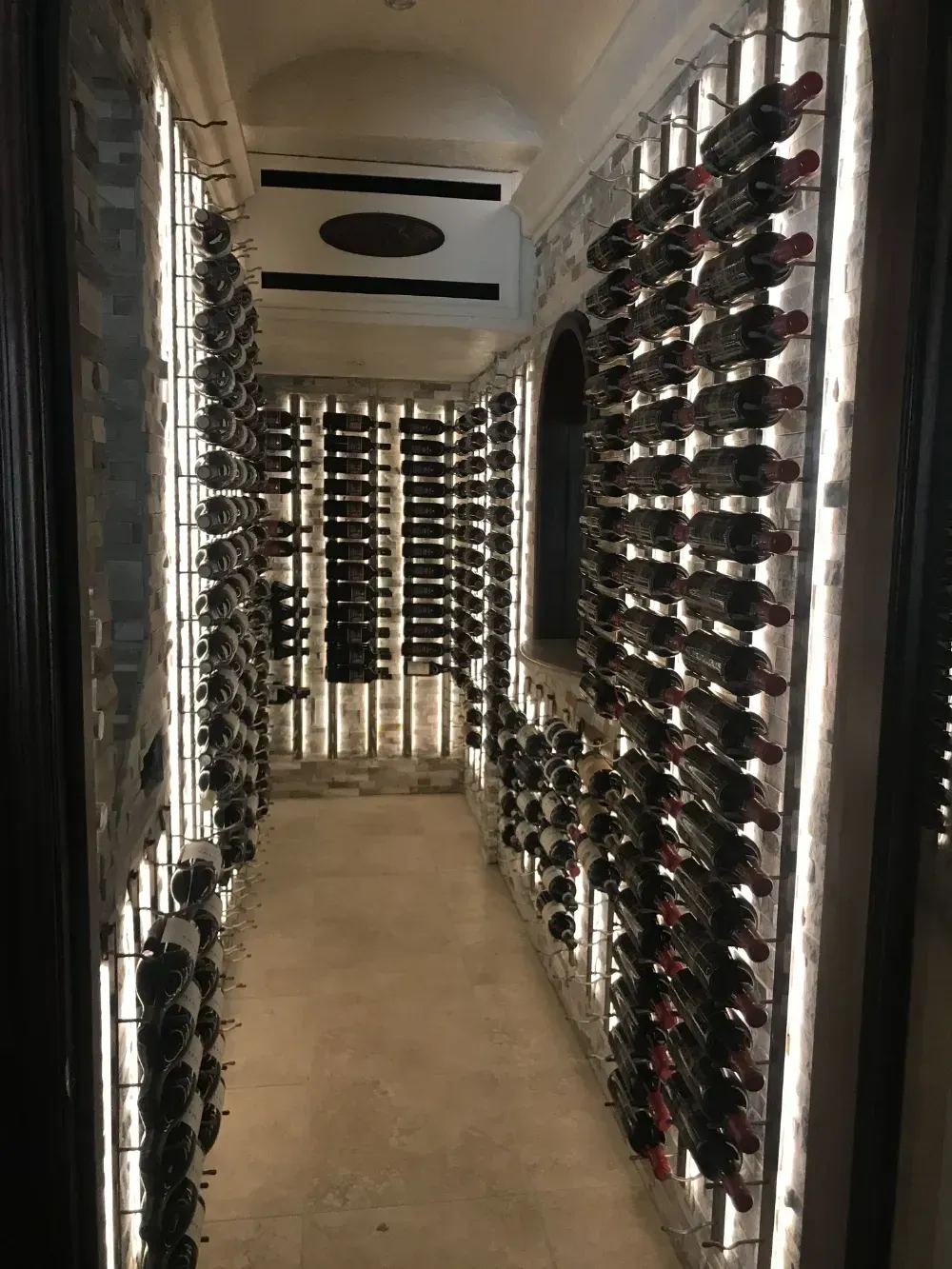
Understanding the Space and the Collection
Design begins with discovery. Before layouts or materials are discussed, we focus on understanding the space available and the collection it will hold.
Every home presents different opportunities and constraints. Ceiling height, room shape, adjacency to living areas, and natural light all influence design decisions. We evaluate how the wine cellar will be approached, viewed, and experienced, both from within the room and from surrounding spaces.
The wine collection itself is equally important. Bottle count, format variety, case storage needs, and growth expectations all inform the design. A cellar built only for the present moment can feel limiting over time. Our goal is to design spaces that support how clients collect, store, and enjoy wine for years to come.
Glass Wine Cellar Design Considerations
Glass wine cellars require a higher level of design discipline. Transparency brings both opportunity and responsibility. Every detail is visible, from racking alignment to lighting placement.
We design glass wine rooms with careful attention to framing, sightlines, and reflections. The goal is to create clarity rather than visual noise. Glass is treated as an architectural element, not a novelty, and it is integrated into the surrounding structure so the wine room feels intentional and refined.
Lighting is especially important in glass designs. We control brightness, color temperature, and angle to ensure bottles are highlighted without glare or excessive reflection.
Layout Planning and Spatial Flow
Display and Storage Balance
A successful wine cellar design balances visual impact with practical storage. Some clients want a strong emphasis on display, with bottles showcased as part of the interior design. Others prefer a more storage focused approach that prioritizes capacity and organization.
We plan racking zones that clearly define display areas, everyday access bottles, and long term storage. This organization allows the cellar to remain visually calm and easy to use, even as the collection grows.
Movement and Proportion
How a person moves through a wine cellar affects how the space feels. Walkways, turning clearances, and access points are designed to feel comfortable rather than constrained. Proportion plays a key role in creating a sense of ease and refinement, especially in compact or under stair spaces.
Visual Direction and Material Expression
Wine cellar design should feel cohesive with the rest of the home. We develop a clear visual direction that aligns with the architectural language and interior finishes already in place.
Traditional and Warm Design Language
For clients drawn to classic wine cellars, we design spaces that emphasize warmth and depth. Wood tones, stone surfaces, and layered textures create an environment that feels established and timeless. These designs are carefully proportioned to avoid feeling heavy or overly ornate.
Modern and Architectural Design Language
Modern wine cellar design focuses on clarity and restraint. Clean lines, minimal detailing, and glass elements allow the wine itself to become the focal point. These spaces often feel gallery like, with lighting and composition guiding the experience.
Transitional Design Approaches
Many homes benefit from a transitional approach that blends modern structure with warmer materials. This balance allows the wine cellar to feel both current and enduring, avoiding strong stylistic extremes.
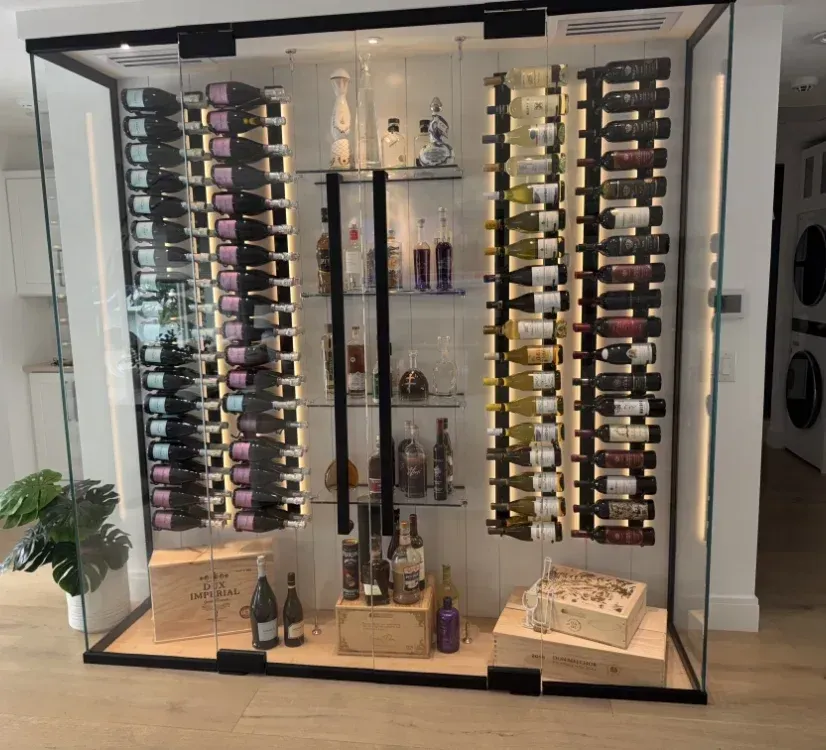
Lighting Design as a Core Element
Lighting defines the mood of a wine cellar as much as materials and layout. Poor lighting can make even the most expensive finishes feel flat, while thoughtful lighting brings depth and elegance to the space.
Our wine cellar designs incorporate layered lighting strategies. Ambient lighting establishes overall tone. Accent lighting highlights key display areas. Task lighting supports usability without drawing attention to itself.
Lighting control is also considered. A wine cellar should feel appropriate during both daytime and evening use, whether viewed from a distance or experienced from within.
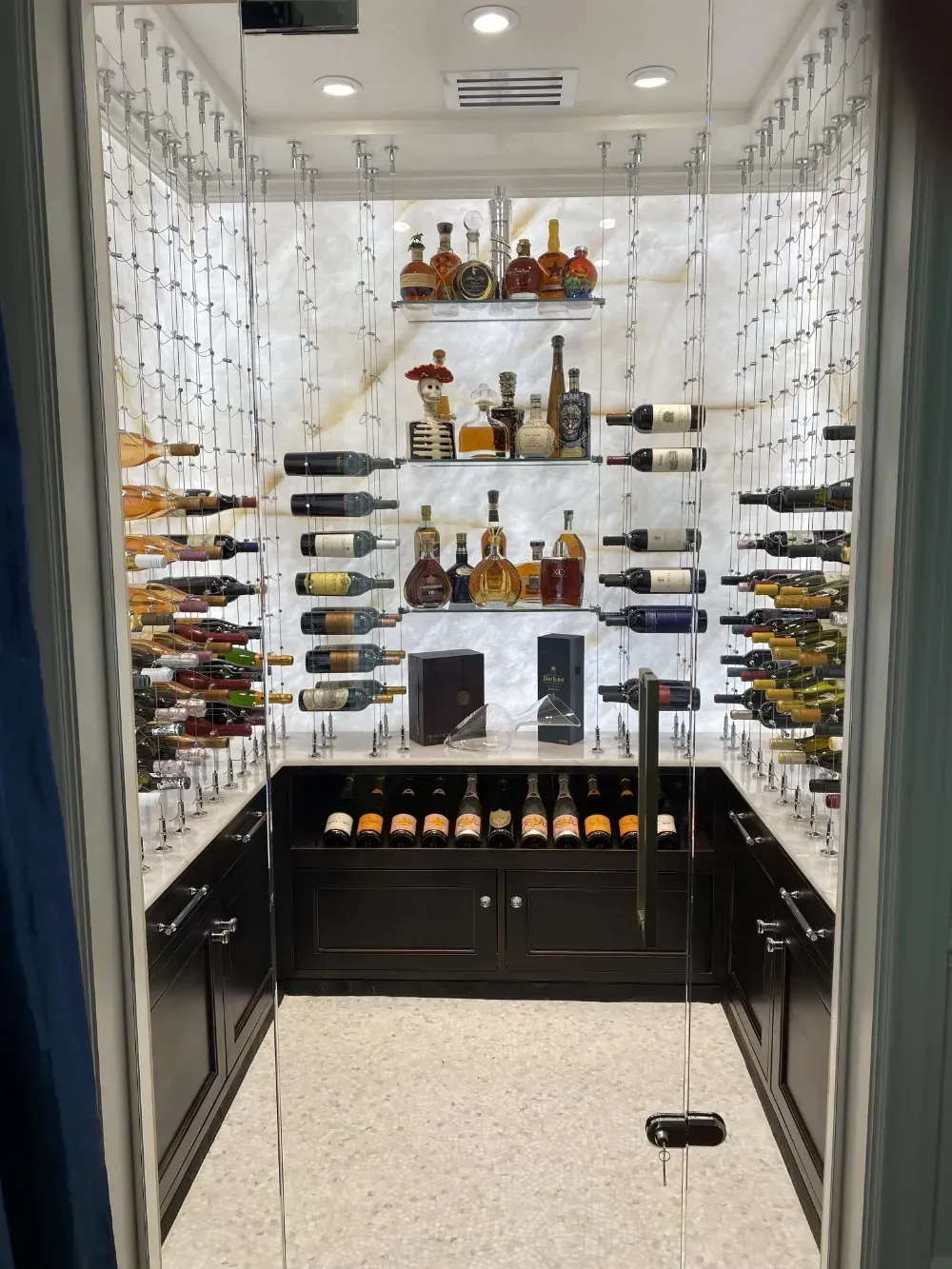
Lighting Design as a Core Element
A wine cellar design must support preservation performance from the start. Insulation strategy, door placement, sealing details, and climate planning are considered during design, not deferred to construction.
Florida’s coastal environment requires careful planning to maintain stable temperature and humidity. By integrating performance considerations early, we avoid design compromises later and ensure the finished space performs as beautifully as it looks.
Wine Cellar Design for New Construction and Existing Homes
New Construction Design Integration
For new builds, wine cellar design is most effective when addressed early. We collaborate with architects and builders to ensure space allocation, mechanical planning, and structural conditions support the intended design. Early involvement allows the wine cellar to be fully integrated into the home rather than adapted after the fact.
Design for Remodels and Conversions
In existing homes, wine cellar design often involves creative use of space. Under stair areas, spare rooms, and transitional zones can be transformed into compelling wine environments with thoughtful planning. Our design approach respects the existing architecture while introducing new purpose and refinement.
Collaboration With Design Professionals
Wine cellar design frequently involves coordination with interior designers and architects. We work as part of the broader design team, aligning finishes, proportions, and detailing with the overall vision of the home.
Clear communication and detailed planning allow the wine cellar to feel cohesive within the project, supporting the larger design narrative rather than competing with it.
Design That Enhances the Experience of Wine
A thoughtfully designed wine cellar elevates how wine is stored, viewed, and enjoyed. It becomes part of daily life and a meaningful feature of the home rather than a hidden utility space.
At Coastal Custom Wine Rooms, wine cellar design is approached with discipline, creativity, and respect for both the collection and the architecture that surrounds it. The result is a space that feels balanced, intentional, and enduring.