
Glass Wine Cellars That Combine Transparency, Architecture, and Performance
The Architectural Impact of Glass Wine Cellars
Glass wine cellars transform wine storage into an architectural experience. Rather than concealing the collection, glass allows it to become part of the home’s visual composition. At Coastal Custom Wine Rooms, glass wine cellars are designed as intentional architectural elements, not decorative additions.
A well executed glass wine cellar creates presence without excess. It introduces depth, reflection, and rhythm while maintaining clarity and restraint. When integrated correctly, the space feels permanent and refined, enhancing the surrounding architecture rather than competing with it.
Glass wine cellars are particularly well suited to luxury homes where design continuity, sightlines, and material harmony are essential.
Serving luxury homes from Naples to Sarasota
Coastal Custom Wine Rooms provides wine cellar design services throughout Florida’s west coast, including Naples, Bonita Springs, Estero, Fort Myers, Cape Coral, Punta Gorda, Port Charlotte, Englewood, Venice, and Sarasota.
Our Design Center is located at 6260 Shirley Street, Suite 605, Naples, Florida 34109. Business hours are Monday through Friday, 8:00 AM to 4:00 PM.
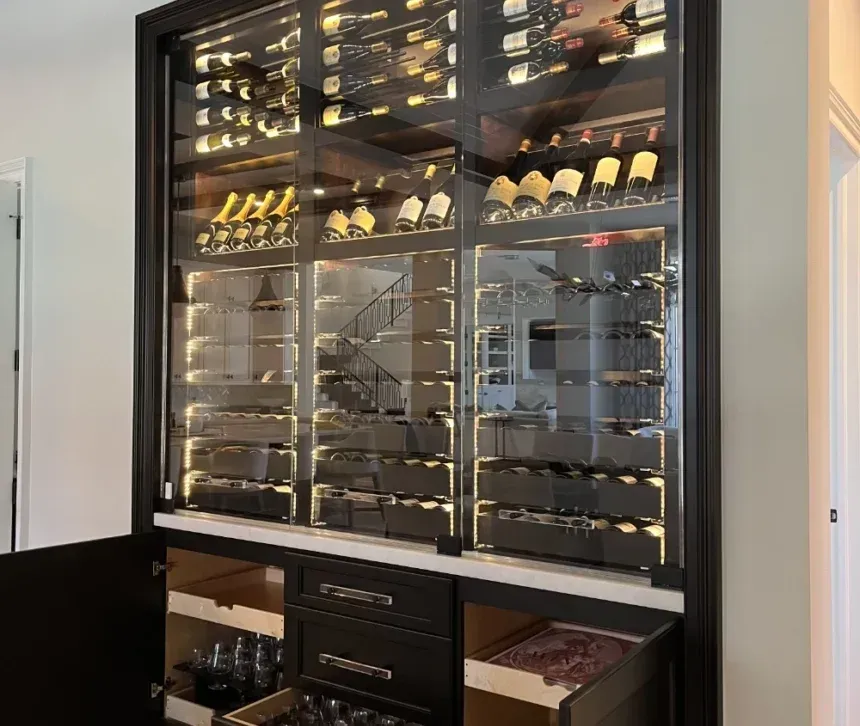
Designing With Transparency and Restraint
Transparency demands discipline. In a glass wine cellar, every detail is visible, from racking alignment to lighting placement. This level of exposure requires careful planning and precision at every stage of design.
We approach glass wine cellar design with restraint. The goal is not to overwhelm the space with features, but to allow proportion, repetition, and material quality to define the experience. Clean lines, balanced layouts, and minimal framing ensure the collection remains the focal point.
Glass is treated as a structural and architectural component rather than a novelty. Its role is to reveal the space, not distract from it.
Lighting Design in Glass Wine Cellars
Lighting is one of the most important elements in a glass wine cellar. Poor lighting can introduce glare, reflections, and visual clutter, while thoughtful lighting enhances depth and refinement.
We design layered lighting systems that highlight the collection without overpowering it. Accent lighting is positioned to create even illumination across bottles. Ambient lighting establishes a calm overall tone.
Color temperature is selected carefully to complement labels and materials while avoiding harshness. Lighting control allows the cellar to shift seamlessly from a subtle daytime presence to an evening focal point.
Layout Planning for Glass Wine Cellars
Sightlines and Visual Flow
Glass wine cellars are often viewed from multiple areas within the home. We study sightlines carefully to ensure the cellar reads clearly from every angle. Bottle orientation, racking rhythm, and focal points are aligned so the space feels composed whether viewed up close or from a distance.
Visual flow is essential. The eye should move naturally across the collection without interruption. This is achieved through consistent spacing, balanced proportions, and thoughtful organization of display and storage zones.
Display Focused Storage Strategies
Glass wine cellars typically emphasize display. We design storage layouts that highlight label facing bottles while maintaining practical access. Long term storage zones are integrated discreetly so functionality does not disrupt the visual clarity of the space.
The result is a cellar that feels curated rather than crowded, even as the collection grows.
Glass Enclosure Design Considerations
Framing and Structural Integration
Framing plays a critical role in the success of a glass wine cellar. Heavy or inconsistent framing can disrupt the sense of clarity and precision.
We design framing systems to feel minimal and intentional. Structural support is integrated seamlessly into the surrounding architecture so the enclosure feels light without compromising stability or safety.
Door Systems and Access
Glass wine cellar doors must balance performance with aesthetics. Proper sealing and alignment are essential to maintain climate control while preserving a clean appearance.
Door placement, swing direction, and handle detailing are all considered to ensure ease of use and visual consistency with the enclosure.
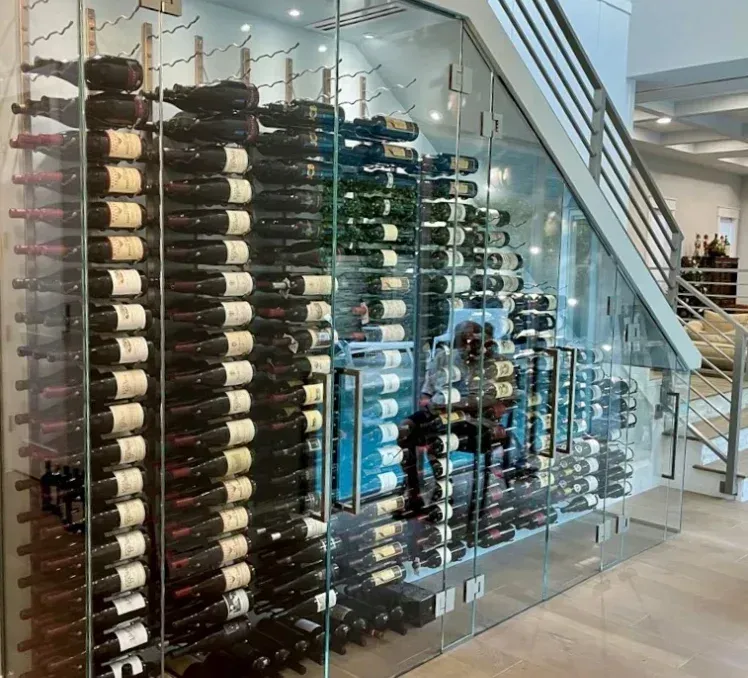
Glass Enclosed Modern Wine Cellars
Glass enclosed wine cellars are a hallmark of modern design. These spaces require exacting standards of planning and execution, as every detail is visible.
We design glass enclosures to feel light and architectural. Sightlines are studied from multiple viewpoints, including adjacent rooms and primary circulation paths. Reflections, transparency, and framing are carefully balanced to maintain clarity.
Performance is never compromised. Glass enclosures are designed with proper sealing and integration so the wine cellar functions as a controlled environment while remaining visually open.
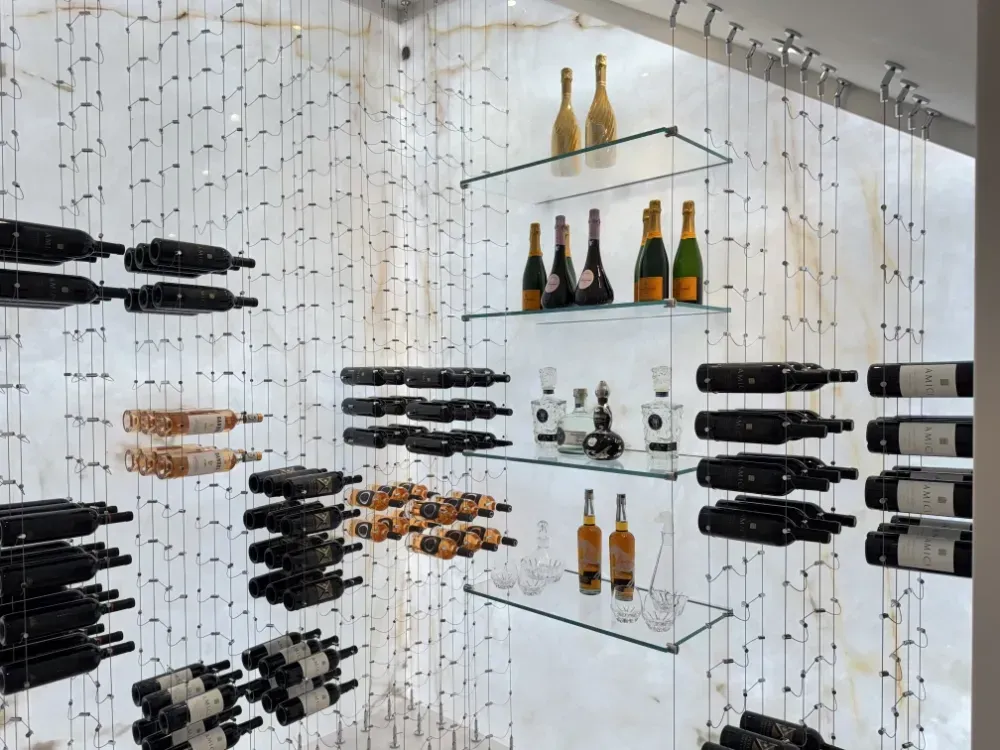
Performance Built Into Modern Design
Modern wine cellars demand the same level of preservation performance as traditional cellars. Design clarity does not replace technical discipline.
Insulation, vapor control, sealing, and climate planning are integrated into the design from the start. These elements are concealed within the structure so the finished space remains clean and uncluttered.
This approach ensures the wine cellar performs reliably while maintaining a refined and minimal appearance.
Materials That Complement Glass Wine Cellars
Glass wine cellars rely on a limited palette of refined materials to maintain clarity and balance.
Racking Systems and Finishes
Racking systems are selected for their precision and visual consistency. Clean lines, uniform spacing, and thoughtful detailing ensure the racking supports the architecture rather than competing with it.
Finishes are chosen to complement both the wine and the surrounding interior, creating cohesion across spaces.
Floors, Walls, and Surrounding Surfaces
Surrounding surfaces play an important role in how a glass wine cellar is perceived. Floors, walls, and adjacent finishes are considered as part of the overall composition.
Neutral and refined materials help maintain focus on the collection while supporting the architectural intent of the space.
Performance Behind the Glass
Despite their transparency, glass wine cellars must perform as controlled environments. Preservation is never secondary to appearance.
We integrate insulation, sealing, and climate planning into the design and construction of glass wine rooms. These elements are concealed within the structure so performance does not disrupt visual clarity.
This approach ensures the wine cellar maintains stable temperature and humidity while remaining visually open and refined.
Glass Wine Cellars in New Construction
Glass wine cellars are most effective when planned early in new construction projects. Early coordination allows the enclosure to be integrated into the architecture, ensuring proper proportions, structural support, and mechanical planning.
We collaborate with architects and builders to position glass wine cellars strategically within the home, often as focal points in living or dining areas. This integration results in a space that feels intentional from the start.
Glass Wine Cellars in Existing Homes
Glass wine cellars can also be introduced into existing homes through thoughtful remodels. Transitional spaces, under stair areas, and unused rooms can be transformed into striking glass enclosures.
Our approach respects the existing structure while introducing clarity and refinement. Careful planning ensures the new wine cellar feels cohesive with the home rather than imposed upon it.
Collaboration With Architects and Interior Designers
Glass wine cellars often sit at the center of architectural and interior design conversations. We work closely with designers and architects to align proportions, materials, and detailing with the broader vision of the home.
Clear collaboration ensures the glass wine cellar enhances the overall design narrative and integrates seamlessly with surrounding spaces.
Glass Wine Cellars With Enduring Sophistication
A glass wine cellar should feel refined, intentional, and timeless. When designed with discipline and executed with precision, it becomes an architectural feature that elevates the entire home.
At Coastal Custom Wine Rooms, glass wine cellars are crafted to deliver clarity, performance, and lasting presence, creating spaces where wine is preserved beautifully and experienced fully.